

Instant coffee is the shortcut that millions of people reach for when they need coffee in a hurry. No grinder, no filter, and no waiting for a full pot. Just hot water, a spoon, and a mug. But if you are watching your caffeine intake, the question gets more complicated than it looks. How much caffeine is actually in instant coffee with caffeine? The honest answer is that it depends on the brand, the serving size, and the format you pick.
Some people assume instant coffee is weak. Others assume it is loaded with caffeine because it is concentrated into a powder or granules. Both assumptions miss the real picture. The caffeine content of instant coffee sits on a wide spectrum, and knowing where your favorite jar or packet falls can help you plan your daily intake with confidence.
This article breaks down the caffeine numbers you can expect from instant coffee, explains why those numbers vary, and offers practical guidance for choosing a product that fits your routine.
How Much Caffeine Is in a Cup of Instant Coffee?
Regular instant coffee, meaning the non-decaffeinated kind, has a median caffeine content of 66 mg per cup, with a range of 29 to 117 mg per cup. Those figures are based on a median cup size of 225 ml, which is close to a standard mug. So a typical cup of instant coffee lands somewhere around 66 mg, but the spread is wide enough that one brand's cup can feel noticeably stronger than another's.
To put that number in context, a cup of regular brewed coffee contains 60 to 145 mg of caffeine. Instant coffee generally contains about 20 to 45 percent of the total caffeine found in a cup of regular coffee. That does not mean instant coffee is caffeine-free. It just explains why a mug of instant often tastes and feels lighter than a mug of drip coffee made from the same volume of liquid.
For a quick comparison, here is how the caffeine levels stack up across common coffee formats:
| Coffee type | Caffeine per serving | Notes |
|---|---|---|
| Regular brewed coffee | 60 to 145 mg per cup | Baseline for comparison |
| Instant coffee (median) | 66 mg per cup | Range of 29 to 117 mg per cup |
| Instant coffee (typical packet) | About 62 mg per pack | Average across single-serve packs |
| High-caffeine instant coffee | About 300 mg per packet | Found in products like Death Wish Coffee Instant Coffee |
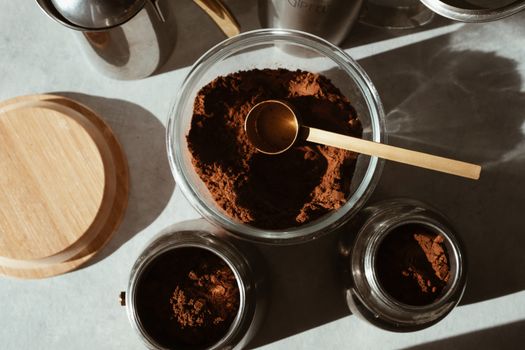
Instant Coffee Caffeine by the Spoon and the Packet
How you make instant coffee matters as much as which brand you buy. The same jar can deliver a modest dose or a substantial one depending on how much powder you use and how large your mug is. Breaking the numbers down by spoon and by packet makes the math easier to manage.
Measuring by the Teaspoon
If you make instant coffee from a jar, the serving size is usually a spoonful, and the caffeine adds up faster than you might think. One teaspoon of a classic instant coffee contains roughly 30 to 35 mg of caffeine. That means three tablespoons, which equals nine teaspoons, delivers 270 to 315 mg. Most people do not use nine teaspoons in a single cup, but the math shows how quickly the total climbs when you make a larger or intentionally stronger mug.
Single-Serve Packets and Travel Packs
Instant coffee is sold in single-serve packets as well as jars, and the caffeine per packet varies just as much. The average instant coffee packet delivers anywhere from 30 to 100 mg of caffeine, and you can assume approximately 62 mg per packet for a typical product. Some brands push well beyond that range. Death Wish Coffee Instant Coffee contains approximately 300 mg of caffeine per packet, a level that rivals the strongest brewed coffees.
Packets are built for portability. A box of 32 single-serve packets is easy to slip into a backpack, glove compartment, or travel bag for a quick caffeine boost whenever you need it. That convenience is one of the main reasons people choose packet formats over jars, especially when they are away from home.
Why Caffeine Levels Differ Between Instant Coffees
The range of 29 to 117 mg per cup is wide, and it comes down to a few factors. Different brands use different blends and different production methods, and the concentration of coffee solids in each serving is not the same across products. Some instant coffees are roasted and processed to deliver a bolder, stronger cup, while others are designed to be milder and smoother.
Marketing also plays a role. A growing category of high-caffeine instant coffee is sold specifically for people who want maximum energy in a convenient format. Those products lean into bold flavor profiles, powerful per-packet caffeine numbers, and portable packaging. A standard jar of instant coffee, by contrast, is usually aimed at everyday drinkers who want a quick cup without a dramatic caffeine spike.
Your own serving size is the biggest variable you control. The median instant coffee cup size is 225 ml, and the caffeine content changes with how much powder you add. A heaping spoonful of a strong brand can easily land at the top of the range, while a light scoop of a milder brand might come in closer to the bottom.
How to Choose the Right Instant Coffee with Caffeine
Choosing an instant coffee with the right caffeine level does not require a chemistry degree. It just takes a little label reading and a clear idea of what you want from the cup. Keep these points in mind:
- Start with your target caffeine range. If you want a standard dose, look for products in the 30 to 100 mg per packet range. If you want a strong cup, seek out high-caffeine instant coffee with packets around 300 mg.
- Check the label. Not every package lists caffeine per serving, but the ones that do make comparison easy. Look for the per-teaspoon or per-packet number before you buy.
- Match the format to your routine. Jars work well at home. Single-serve packets are the better choice for travel, camping, or keeping in a car. A 32-count box of packets is designed for exactly that kind of convenience.
- Consider flavor. High-caffeine instant coffee is available in bold, rich profiles, and flavored coffees are also an option if you prefer something sweeter or more festive.
- Think about freshness. Instant coffee is prized for convenience, but flavor can suffer when the product sits on a shelf. If freshness matters more to you, roast-to-order roasters like JCO Roast roast whole bean and ground coffee after you place your order, giving you control over strength and a noticeably fresher cup.
It is worth remembering that caffeine is only one part of the experience. A high number on the label does not guarantee a great flavor, and a lower number does not mean the coffee is bad. The right choice balances how much caffeine you want with how the coffee actually tastes and how easy it is to prepare in your daily routine.
If you are torn between instant and freshly roasted coffee, think about your brewing situation. Instant coffee wins on speed and portability. Freshly roasted coffee wins on aroma, complexity, and the satisfaction of brewing a batch yourself. Many coffee drinkers keep both around, using instant packets for travel days and a roast-to-order bag for their morning ritual at home.

Frequently Asked Questions
Is there caffeine in instant coffee?
Yes. Regular, non-decaffeinated instant coffee contains caffeine, with a median of 66 mg per cup and a range of 29 to 117 mg per cup based on a 225 ml serving. Decaffeinated instant coffee is a separate product and contains far less. If you are counting caffeine, always check whether the label says regular or decaf.
Is instant coffee lower in caffeine than brewed coffee?
Usually yes. A cup of regular brewed coffee contains 60 to 145 mg of caffeine, and instant coffee typically contains about 20 to 45 percent of the caffeine found in a cup of regular coffee. The exact difference depends on the brand, the serving size, and how much instant coffee powder you use.
How much caffeine is in two teaspoons of instant coffee?
Based on the 30 to 35 mg per teaspoon figure for classic instant coffee, two teaspoons provide roughly 60 to 70 mg of caffeine. That is similar to the median 66 mg per cup. Using heaping spoons or switching to a high-caffeine brand will shift the total upward.
Which instant coffee has the most caffeine?
High-caffeine instant coffee products are sold with roughly 300 mg per packet, such as Death Wish Coffee Instant Coffee. A Food & Wine report on caffeinated coffee found that Café Bustelo Espresso Ground Coffee had the highest caffeine levels among grocery-store brands tested, so ground coffee drinkers have a strong option there too. For instant coffee specifically, compare the per-packet numbers on the label before buying.